.avif)
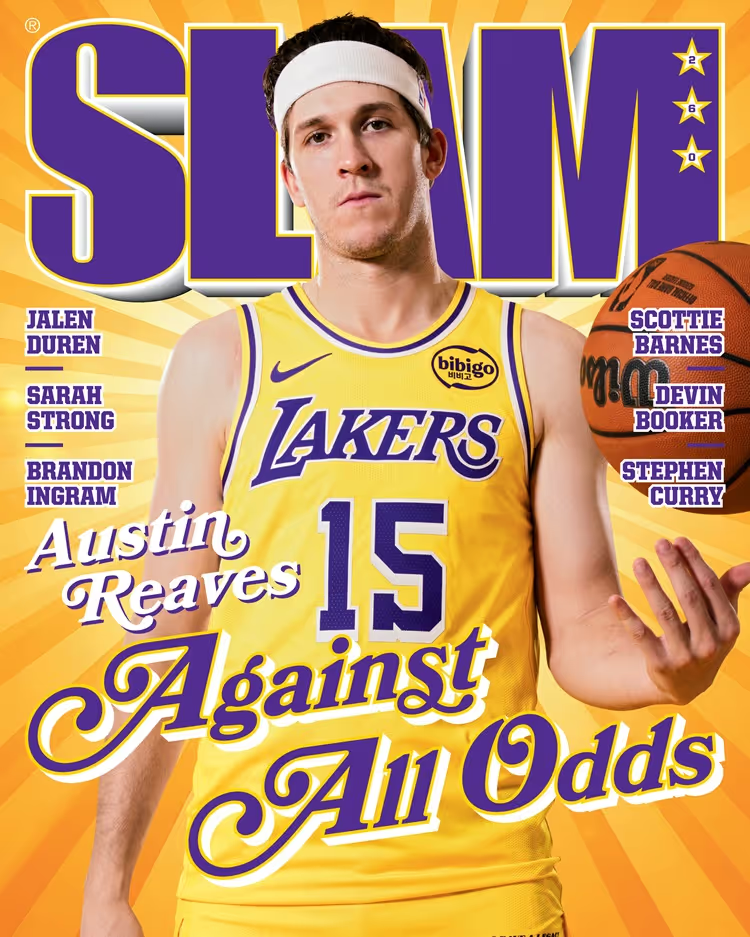
It’s a cliché you hear often: “Hollywood scripted story.” But trust us, if there’s ever one that fits, it’s Austin Reaves’ rise into a bonafide star with the Los Angeles Lakers.
An unknown kid from Newark, AR—a town with a population that barely surpasses 1,000—goes undrafted, then signs a two-way deal with the Lakers, which then gets converted into a regular contract, which then leads to a four-year, $56 million agreement. The odds of having this type of career arc are very, very, very slim. And then to be averaging 26.6 ppg for one of the most prestigious franchises in all of sports (which just happens to be in Hollywood’s backyard) while inserting your name into the NBA All-Star conversation? That’s some real movie shit!
But such is the life of Austin Reaves these days. He’s him, as he famously declared on the court during the 2023 NBA playoffs. His rise to becoming a cornerstone of the Lakers is one that the entire sport has taken notice of. It’s a journey that the average fan can relate to—a blue collar guy who’s had to earn every minute and opportunity he’s ever gotten, who was slept on and passed on but ultimately bet on himself and took a risk that is paying dividends today.
But those close to him saw the signs all along, long before the rest of the NBA. To hear his agents Aaron Reilly and Reggie Berry, who recruited him out of college when mock drafts didn’t feature his name, recall the journey, it always felt like it was only a matter of time.
“When players come to us for the pre-draft process, Reg, Al—our trainer—and I usually take them into New York City the night before we start training, just to get them out, talk basketball, life, etc. On the train ride in, Austin asked me about the bench press test at the Combine—whether they still do it. I told him they’d gotten rid of it, and then I asked him what his bench numbers were,” says Reilly. “He said, Honestly, I never really worked out much in the weight room. I looked at him and said, You just murdered the Big 12…and you didn’t even live in the weight room? That moment stuck with me. The Big 12 is arguably the toughest conference in college basketball, and here’s a guy who dominated it while still having an entire physical level he hadn’t even tapped into yet. That’s when I knew we had something special.”
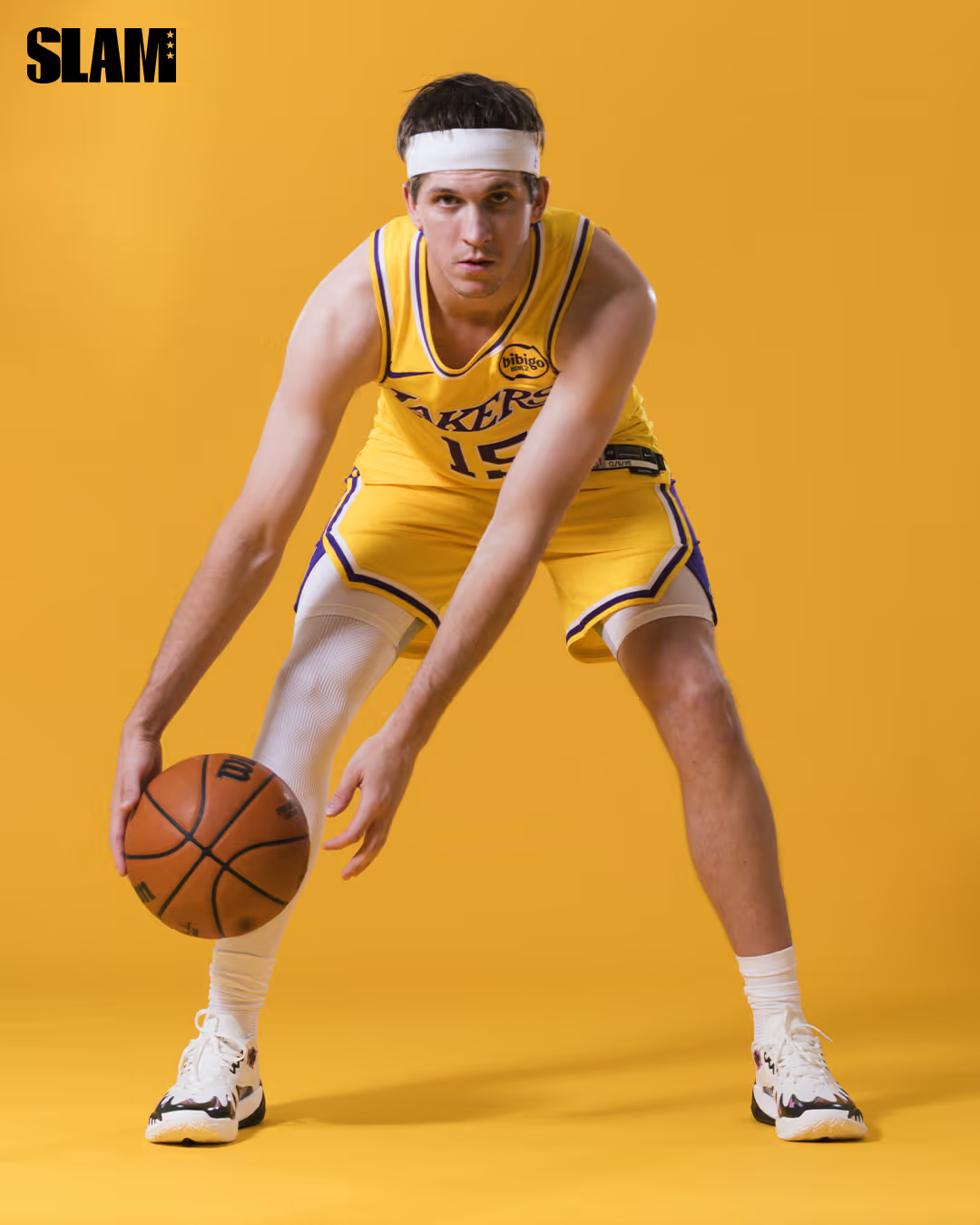
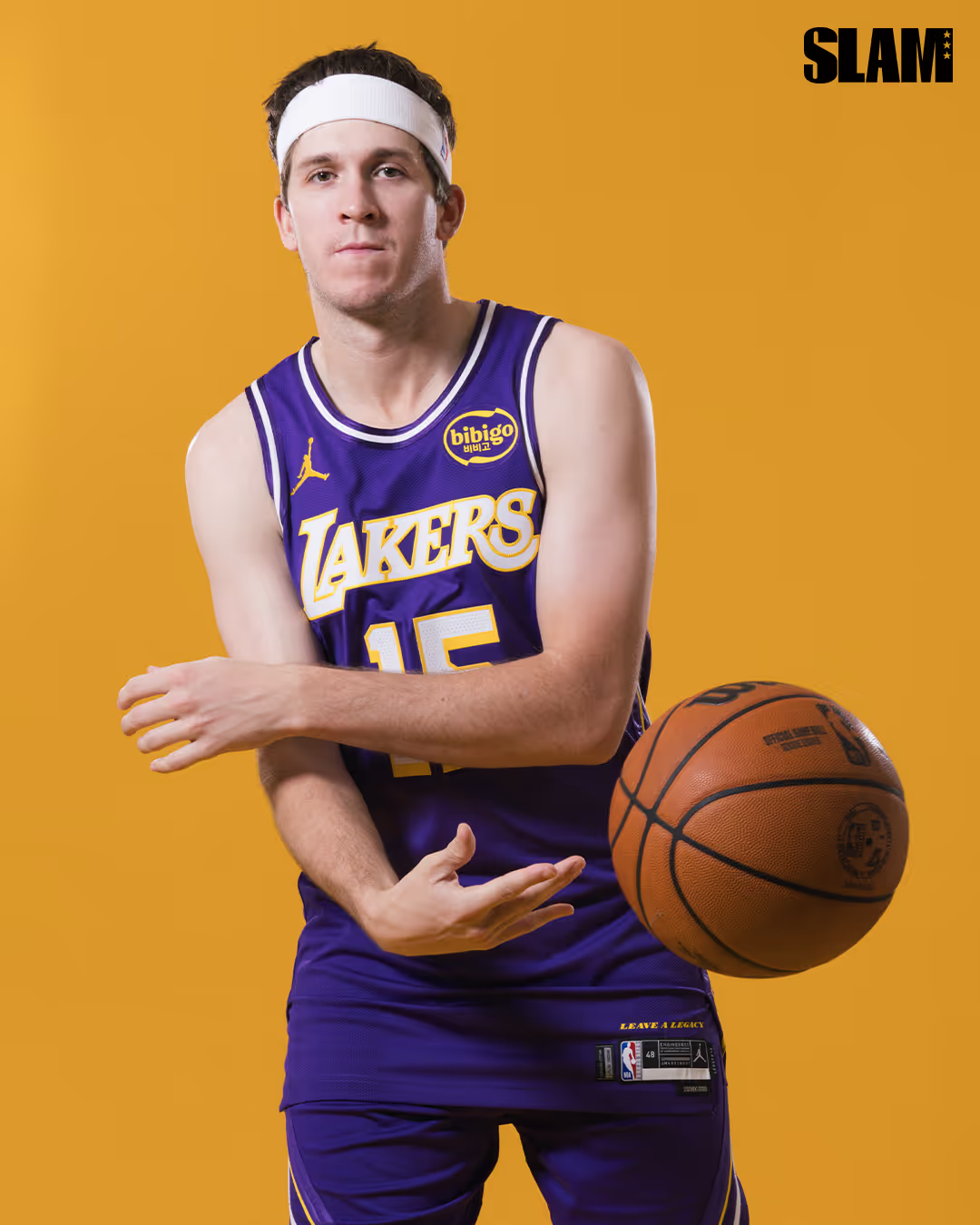
“Before Aaron and I even had the opportunity to recruit him, I remember randomly turning on one of his junior-year games: Oklahoma at TCU. It was March, with real bubble implications. From the jump, I’m watching him give TCU the absolute blues. What stood out most, though, was his composure—despite being down nearly 20 at one point, he never changed how he played. He just kept going to work,” says Berry.
“As the game tightened, he consistently made the right play. You could tell his teammates wanted the ball in his hands and trusted his decision-making. The whole time I’m thinking, Who is this dude?! In true Austin fashion, he ends the game by hitting the buzzer-beater—calm, poised and unfazed. It’s a game I still think about.”
We sat down with Reaves during his cover shoot to discuss his journey, what he’s learned along the way and what’s still to come.
SLAM: Walk us through your mindset that first summer before you even signed your two-way. How high or low were your personal expectations at the time? Did you believe you would land a roster spot with the Lakers eventually?
Austin Reaves: I have confidence in myself, but I think throughout my whole journey, not getting recruited much, obviously going undrafted, definitely doubt creeps in. But I was super confident in how I played basketball. I knew if I got the opportunity, I’d take advantage of it. But it’s just [about] trying to get that opportunity.
SLAM: You had an opportunity to get drafted in the second round by another team, but you and your reps declined that option due to the belief that L.A. was a better fit for you—even if that meant you’d go undrafted. Does your current situation feel like it was your destiny?
AR: It was definitely not easy to say no to an opportunity to hear your name called on draft night, but I trusted the work my agents put in. I trusted the analytics behind how they thought it would go in certain situations. And we knew here I would have an opportunity—with the group that they had at the time—to get my foot in the door and sign that regular contract and get off the two-way contract. I went to Bron’s mini-camp right before training camp. I played really well, and then got the call on, I think it was that Sunday. I think Monday was Media Day, so I got back from that trip and Rob [Pelinka] called me and my agent and offered. I think at the time it was like the 14th spot on the roster. So, I fully signed that as fast as I could and made it a reality.
SLAM: Do you remember any sequence from that mini-camp where you were like, Alright, I think I’m doing something right here?
AR: At first, I was super nervous. I remember I was the first one in the gym the morning of the practice. Everybody started filing in and it was Bron, Russ [Westbrook], Melo [Anthony], AD [Anthony Davis], Dwight [Howard]. And I’m sitting there thinking, What the hell is going on? So, I was definitely nervous at first. And then once we got to running up and down, I felt more at home and [it] just became [about] playing basketball. But there was one play in particular, we drove down, went past [Rajon] Rondo and then threw a no-look pass to Bron and he dunked it. And after that, it felt like the weight of the world was off my shoulders, and it was just time to play basketball.
SLAM: What do you remember about the moment Rob Pelinka informed you that you earned the roster spot and a standard NBA contract?
AR: So, it was that Sunday. It was over Zoom. I literally just got off the flight from Vegas. And my agent texted me the night before, so Saturday night, and was like, Hey, when do you go back? Tomorrow, Rob wants to get on a call. And he didn’t say what it was about. He just asked for us to get on a call. So, I told my agent, What could this be about? And he was like, I don’t really know. I’m hearing some good things, but I don’t want to get your hopes up. And then we got on the Zoom and Rob pretty much got straight to it. We talked for probably five minutes or so, and about a minute into it, he was like, We want to offer you the spot. Like I said, obviously we signed that as fast as possible!
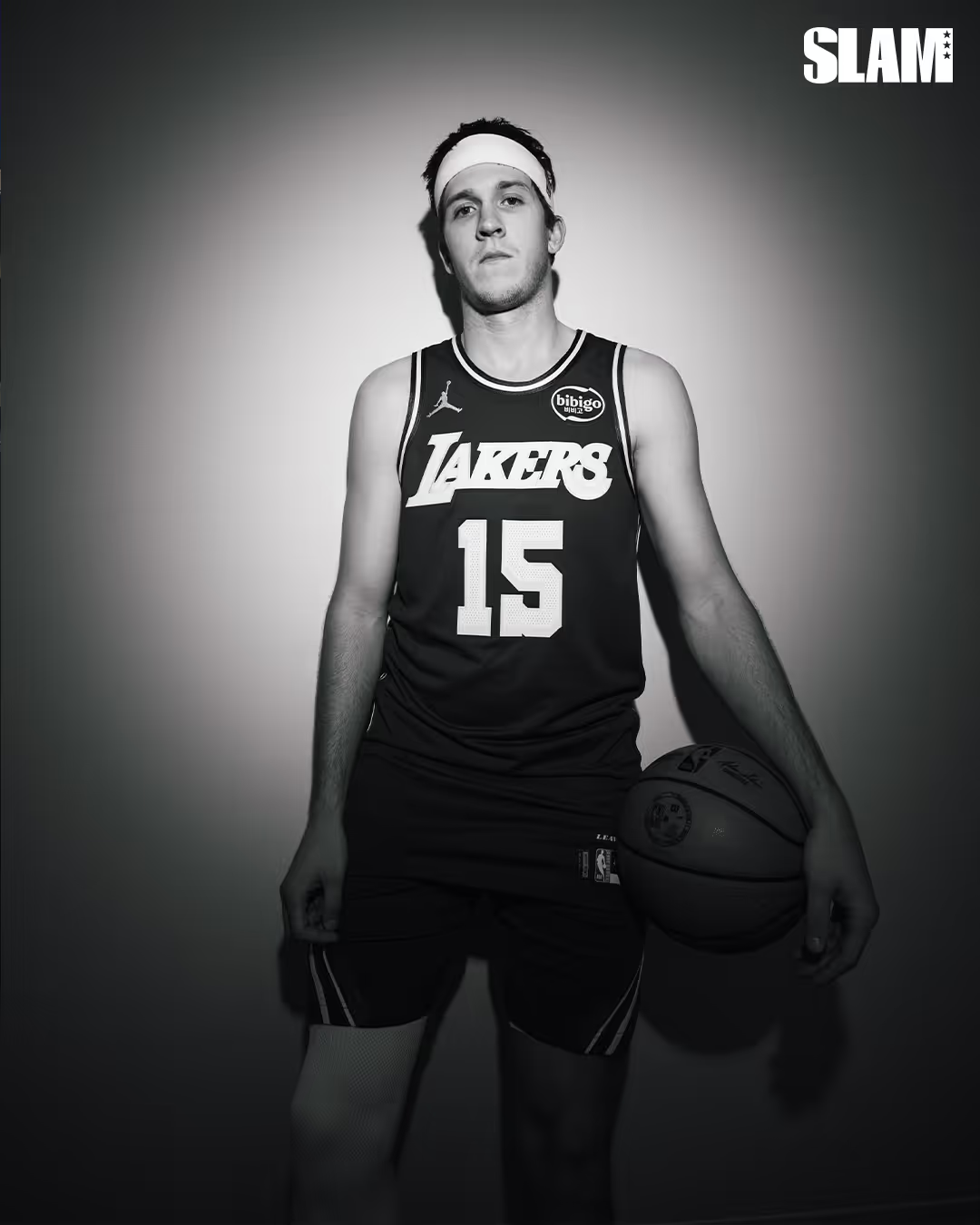
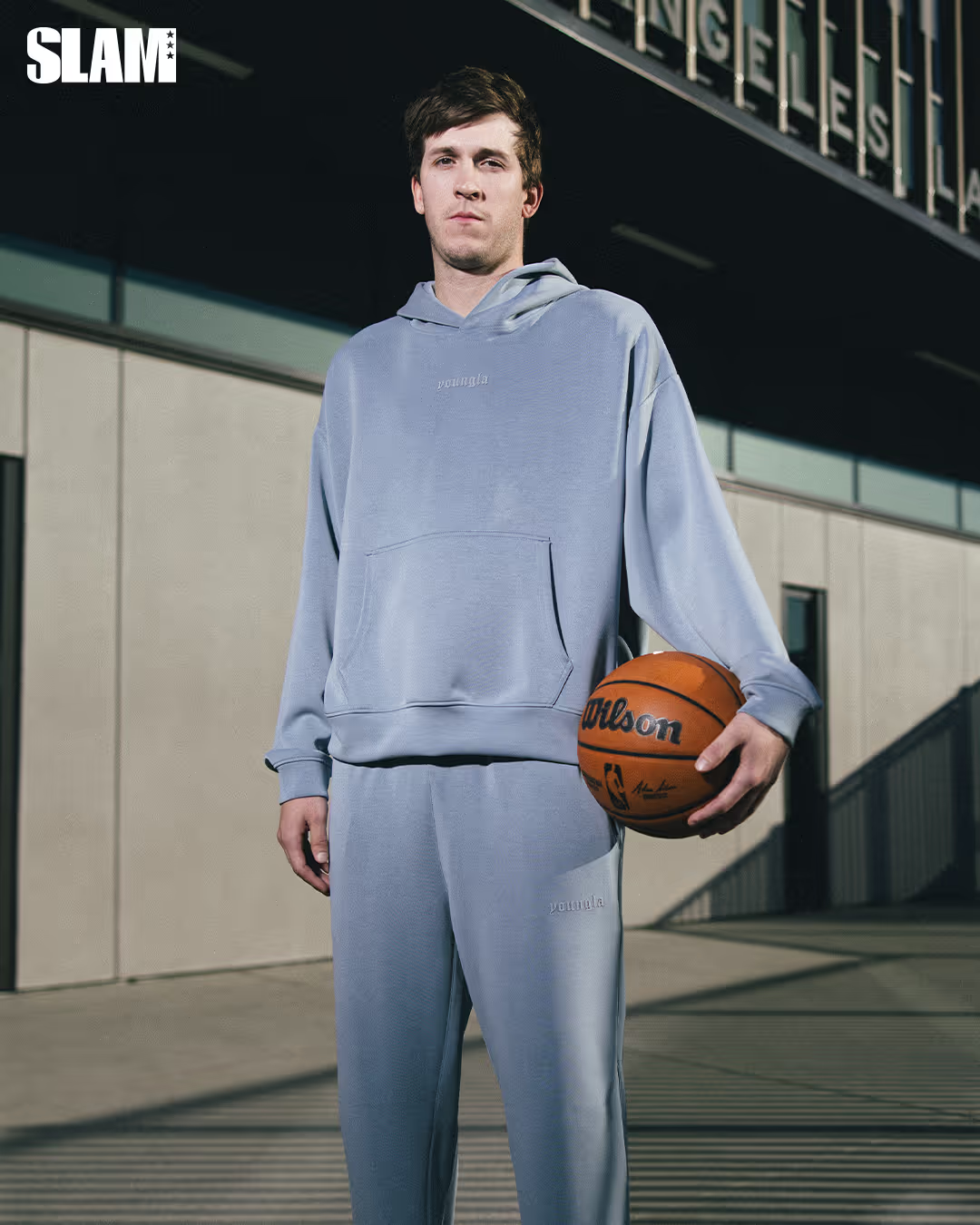
SLAM: Was there a specific veteran who took you under his wing and really helped you get acclimated to the NBA?
AR: Rondo was probably the first one. Frank [Vogel] pulled me to the side and was like, Anything you have a question for, if you don’t feel comfortable talking to the staff or whatever, talk to him. Because everybody knows his IQ for the game. He studies the game unlike anybody else. So, I sat by him on the plane. We would have a game one night, and the next morning Rondo would ask me, Hey, what happened at 5:45 in the first quarter? And if I didn’t know, it wasn’t good. He definitely taught me to watch film and do all the little things. So, he was probably the first one. And then obviously Bron was someone else that was super helpful—every year, but really that first year. Anything that he could help me with, he was willing to do.
SLAM: It’s easy to look back at previous draft classes and say, This guy and that guy were overlooked. Do you feel like you were overlooked coming into the League? If so, how did that fuel you?
AR: I mean, I think it’s kind of been the same thing my whole life. [Not] many offers out of high school. I don’t think I had any stars. Nobody really knew who I was. And so, you just use those things to continue to work and get better. But as far as, like, overlooked, I don’t know. I had a good college career. I was a part of some really good winning teams. Went to OU and had two really good years there. I think my last year averaged around 18. I think if you watch basketball, you could tell I was a decent player. But I think a lot of people didn’t know how it would translate. I just wanted an opportunity.
SLAM: Do you remember any point during your rookie season when maybe self-doubt started kicking in? If so, how did you snap out of it?
AR: One of our first practices ever in training camp…obviously, we had a team full of really good players, Hall of Famers, and I remember Bron—this was one of the only times I ever felt like I didn’t deserve to be on the court—he made a move and tried a hook shot and made it off glass or something. It was something crazy. And I was just like, I don’t know if I can compete with that. But throughout the flow of a season, you’re going to have ups and downs, and in those downs, you just have to remember that everybody goes through it. Everybody talks about the rookie wall. And I was one of those guys who was like, Oh, I’ll never hit the rookie wall. I’ll figure it out. And I remember I think it was probably early January or so, everything you do, you feel like you can’t get right. Coaches, players, everybody at that point were there to pick me up and had my back.
SLAM: Do you remember that moment in an NBA game where you were like, OK, I belong here?
AR: I got a DNP the first night against Golden State. The second night we were playing Phoenix, and they were beating us by like 30 going into the fourth quarter. And we kind of threw in the towel, and Frank subbed me in and I played really well in the fourth quarter. I think just that start was very positive for me. I kind of hit the ground running. I didn’t have a bad game and had to sit there and think about it. And I got more opportunity after that.
SLAM: Fast forward to today and you’re averaging 26.6 points per game. You’re one of the biggest stars on the team. And you’ve been in the running for an NBA All-Star nod. How would you describe your journey four years later?
AR: It’s crazy. I would say there might be a handful of people, when I was 18 years old, 17 years old, who would have thought I would be in a position like this—playing in the NBA. So, looking back, it’s crazy. But it’s fun. I’ve put the work in to be here. I haven’t taken shortcuts. Honestly, I kind of ran around the world to get here. I did everything I possibly could. I sacrificed a lot. So just to be in this position has been a lot of fun. And hopefully we can continue to do that.
SLAM: For those college hoopers who may currently be getting overlooked or not getting the shine they deserve or experiencing self-doubt because their names aren’t in mock drafts, what advice would you offer?
AR: I know it’s super cliché but I believe if you put the work in, at some point you will get an opportunity and [you have] to be ready to take advantage of that opportunity. It’s very easy to get frustrated with the process and things not going the way that you want them to go, but at any moment you can get that opportunity, and that’s one thing my brother [Austin’s brother, Spencer, has played professionally in overseas.—Ed.] did really well at teaching me—that any point, any situation, you just got to get in front of the right person. One person is all it takes, and that one person just has to believe in you enough. And when they do, then you have to be professional enough to take advantage of that opportunity. Just keep working and when that opportunity presents itself, take full advantage of it.
SLAM: What has been your biggest “pinch me” moment so far?
AR: I think playing for Team USA in the FIBA World Cup a couple of years ago. Hitting a game winner on Christmas. Had a triple-double that game as well. There’s been a handful. The one that meant the most to me was the first playoff game against Memphis. I think I had 13 or 14 in the fourth quarter. Kind of took over the game. Memphis is an hour, probably an hour and 30, from where I grew up. So I probably knew over 50, maybe 100, people in attendance. So to do that in my first playoff game in front of basically the whole town that I grew up in was very special.
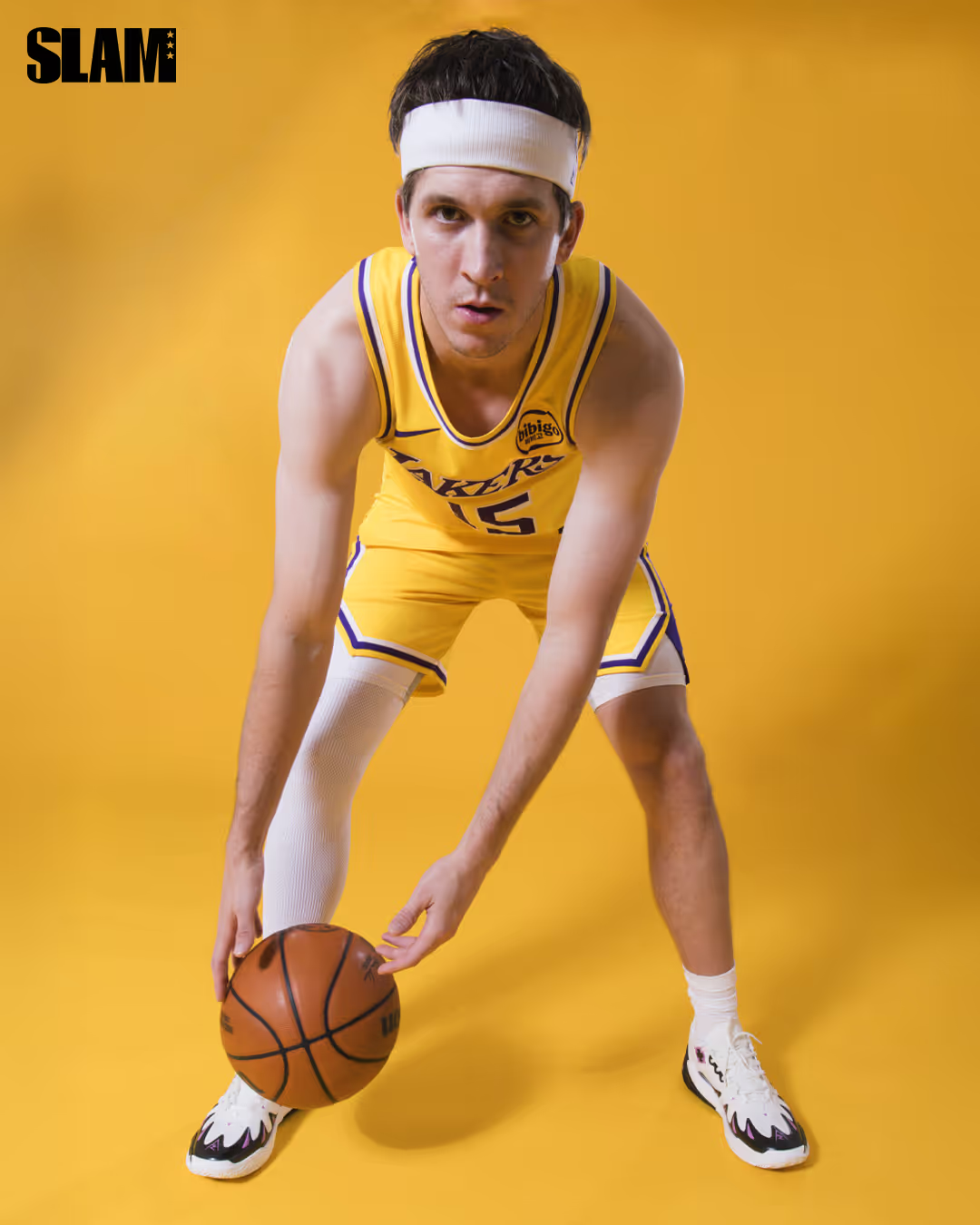


SLAM: You’ve really taken your game to a new level this season. Can you walk us through last summer and identify some of the things you did that have contributed to what we’ve seen?
AR: Yeah, I think the main focus was getting stronger. I would say I’ve done a pretty good job my first four years of building a foundation to where now I could really push weight and get stronger and be able to put myself in positions to be better on the court. And when it comes to basketball, I enjoy trying to get better in every aspect. It’s not just one specific thing. It’s just trying to become a better basketball player overall. But the weight room was the main focus [last] summer.
SLAM: You’ve already defied the odds in so many ways. Looking ahead, what are some goals that you haven’t had a chance to do yet that you want to check off the list?
AR: Winning a championship. That’s been the one thing I wanted to do since becoming a Laker. You know, I grew up a Lakers fan [and] a Kobe fan, and watched all those Finals runs. Just to be able to put this jersey on and have an opportunity to help this organization try to compete for a championship is the main thing. I believe all individual success comes from team success. So, therefore, if you’re winning at the highest level, then all that individual stuff is going to come.
SLAM: You mentioned a lot of the challenges you’ve had to overcome. What was the biggest obstacle you faced and how did you get through it?
AR: I think it was fighting the doubt of not getting an opportunity. And I remember playing games in college against guys who were projected top-10 and top-15, and I’m like, I know I can play with these guys. And my brother was a good soundboard for all my complaining about it. And, like I said, he was the main one telling me to stick with it. And when that opportunity comes, take advantage of it. But there’s a lot of doubt that creeps into your mind when you don’t see your name on draft boards or things like that. There’s obviously doubt, but being able to be mentally strong enough to continue and to fight for what you really want—that was definitely the toughest one.
SLAM: To flip that question, what would you say is your proudest accomplishment of your career so far? What separates it from the rest?
AR: I’ve been very fortunate to meet a lot of people that I grew up watching. Obviously, been able to be teammates with a lot of those guys my rookie year. And then obviously Bron. You know, I wasn’t the biggest fan of Bron growing up—I was a Kobe guy. So that kind of clashed a little bit [laughs]. But being able to be around him every single day, [seeing] the way that he approaches the game, as a student of the game, has been really fun for me because he’s one of the greatest players to ever touch a basketball. So being able to meet people that I idolized growing up and be in the same situations that they were in—I always think about that when I’m in there shooting shots or whatever, that at some point, Kobe had shot the same shot that I was shooting, and countless other Lakers. Those [are] little things that are pinch me moments.
 SHOP COLLECTION